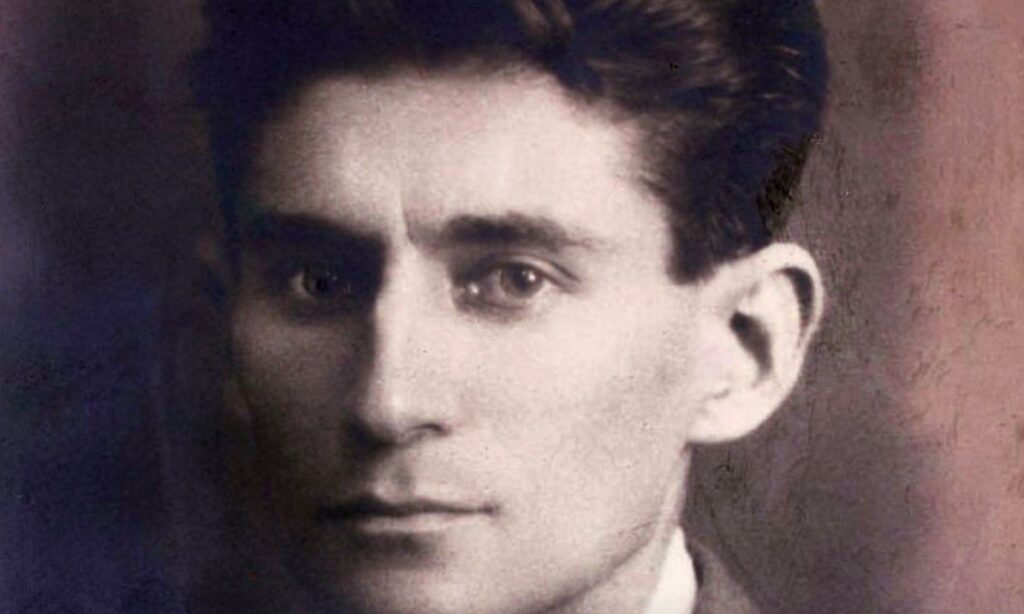
Most of the places Franz Kafka (1883–1924) lived are a few minutes’ walk from Old Town Square. He was born there, grew up in a string of flats around the square, worked a few streets away and is buried in Žižkov, a short tram ride east. He tried to leave once, for Munich in 1902, and was back within days.
He wrote in German, published little and was barely known when he died. The Trial and The Castle only exist because his friend Max Brod ignored Kafka’s last request, which was to burn everything he left behind, unread.
In this article I’ll take you from his birthplace to his grave, via the cafés he went to, the insurance office where he spent fourteen years (it’s now a hotel, and I’ll give you the room number) and the two statues everyone photographs. If you’d rather go with a guide, there’s a Kafka walking tour in English.
“Prague doesn’t let go. Either of us. This old crone has claws,” Kafka wrote to a friend in 1902. Czech friends like to quote that line at me, usually when they’re teasing me about how long I’ve stayed in Prague.
He was Jewish, wrote in German and lived in a city that was becoming more Czech every year, and his feelings about Prague were mixed, to say the least. Still, apart from a few trips to France and Italy and some months in Berlin near the end, he stayed. He left for good only to die, in a sanatorium outside Vienna.
The souvenir shops sell his face on mugs and tote bags, but the real traces are in the streets, and most of them are within walking distance of each other.
1. Kafka’s birthplace
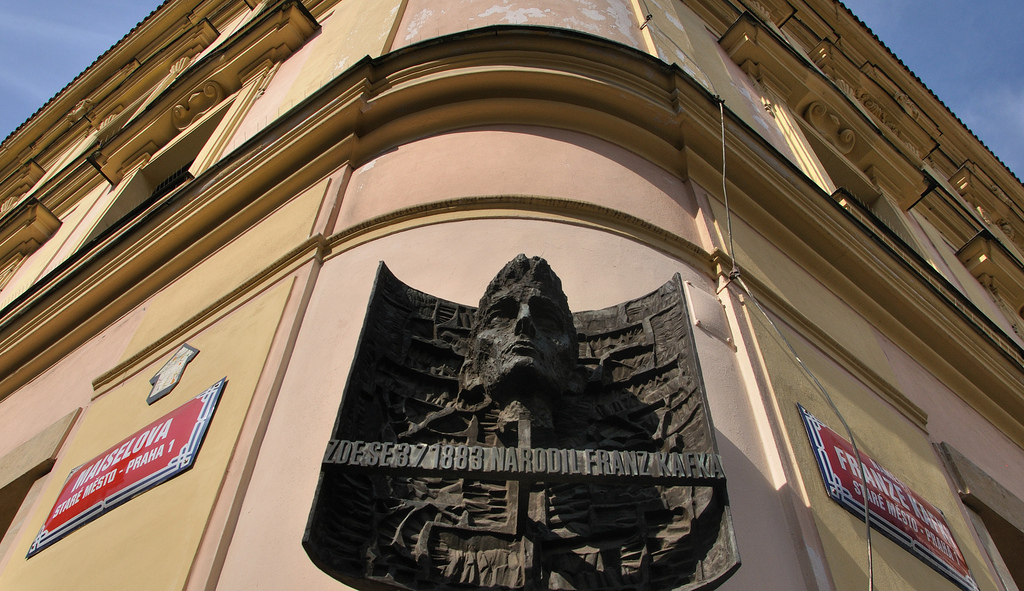
Franz Kafka was born on 3 July 1883 into a Jewish family in the Old Town, the first child of Hermann and Julie Kafka. Kavka is Czech for jackdaw (bird surnames are common here), and Hermann later used a jackdaw as the emblem of his shop.
Until 1885 the family lived right next to St Nicholas Church on Old Town Square, where U Radnice, Kaprova and Maiselova streets meet. The little square in front has been called Náměstí Franze Kafky since 2000. A fire in 1897 destroyed the house, and only the original doorway survives. On the façade, look for the bust of Kafka by the sculptor Hladík. It went up in 1966, three years after a conference at Liblice, organised by the Charles University professor Eduard Goldstücker, brought Kafka back into print. The communist regime had banned him in 1948 as decadent and pessimistic.
The building now houses Kafkoff, a café-gallery that puts on exhibitions and concerts, and a good place for brunch.
The other family homes
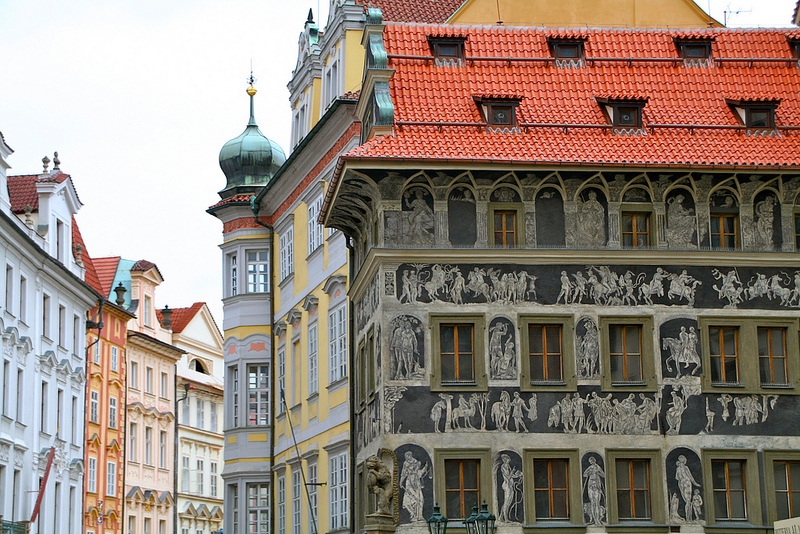
The Kafkas moved often, but never far.
- 1889–1896: U Minuty, the house with the sgraffito next to the Old Town Hall. In Kafka’s day the sgraffito was hidden under plaster. His three sisters were born here. All three were murdered in the Holocaust.
- 1896–1907: the House at the Three Kings, at the start of Celetná, just off the square. According to family legend, his bedroom window looked onto the choir of the Týn Church. From 1893 to 1901 he went to the German grammar school in the Kinský Palace, on the other side of the square, where his parents later ran their haberdashery shop on the ground floor.
- 1907–1913: U Lodi, an Art Nouveau building at Pařížská 30, fourth floor. This is where he wrote The Metamorphosis. The building was destroyed in the Prague Uprising of 1945. On the site today is the Fairmont Golden Prague, the former InterContinental, built in 1974.
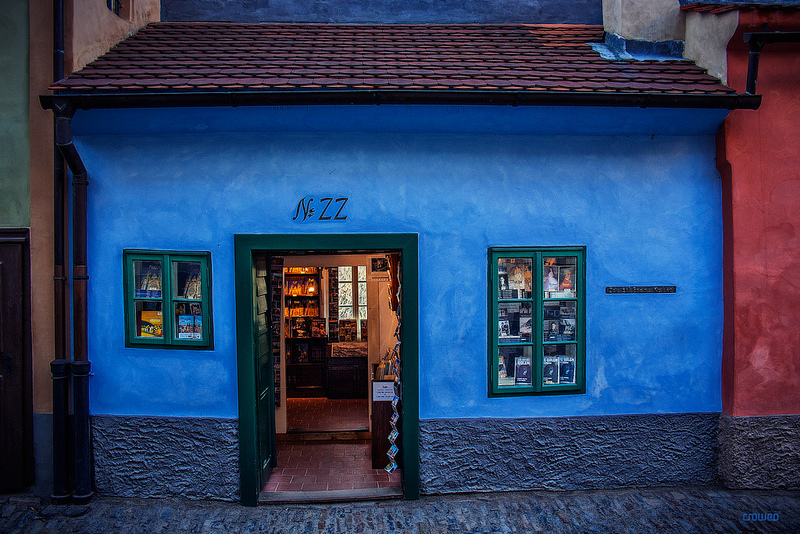
- He also lived at Celetná 2, and in 1916–1917 he wrote in the evenings at Golden Lane 22, a tiny cottage his sister Ottla rented inside Prague Castle. The lane is packed with tourists now, and the cottage is a bookshop devoted to him.
- In 1917 he rented a two-room flat in the Schönborn Palace (Tržiště 15), now the US Embassy. It was here that he first coughed up blood.
- His last Prague home was the family flat on the top floor of the Oppelt House (Staroměstské náměstí 5), on the corner of Old Town Square and Pařížská. There’s a Cartier shop on the ground floor today.
2. Kafka’s office is now a hotel room
After his law degree, Kafka did a legal traineeship in the Clam-Gallas Palace. In 1907 he took a job at the Prague branch of Assicurazioni Generali, in the big salmon-pink building on the corner of Wenceslas Square and Jindřišská. He lasted less than a year.
In 1908 he moved to the Workers’ Accident Insurance Institute at Na Poříčí 7 and stayed until 1922. He was one of its lawyers, assessing how dangerous factory machinery was and dealing with compensation claims. Turning down injured workers sometimes weighed on him, but he was good at the job and was promoted several times. For him it was a “bread-and-butter job” that left too little time for writing, and he complained that a business trip forced him to rush the ending of The Metamorphosis. The forms, the deadlines and the sick notes all found their way into his fiction.
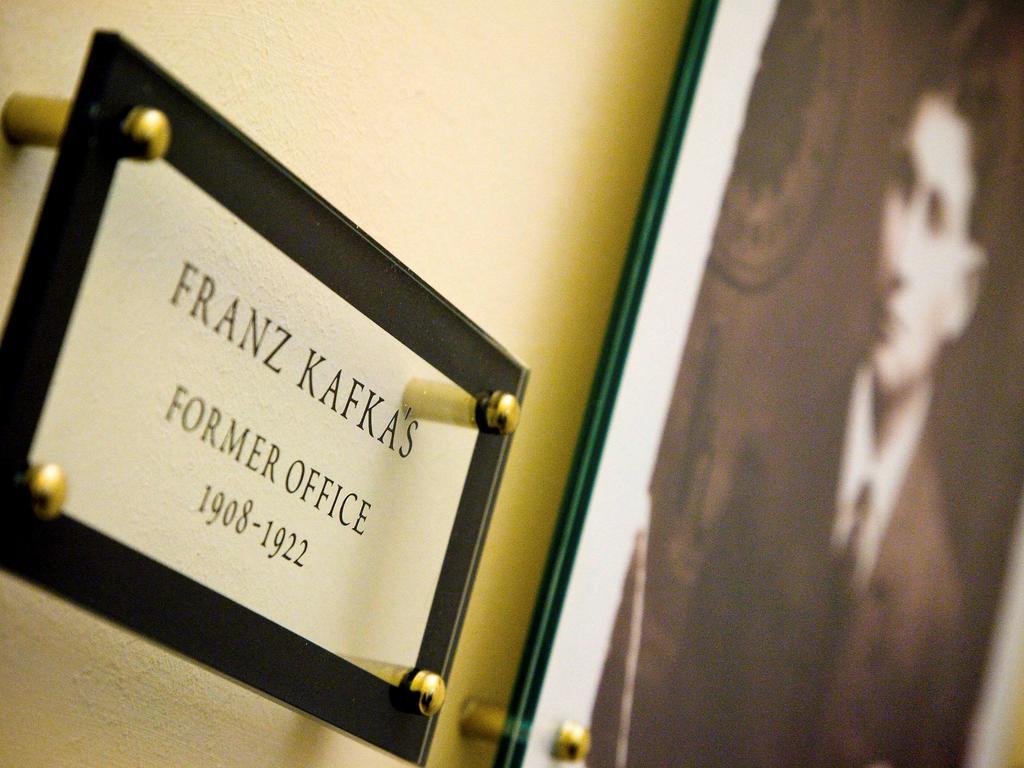
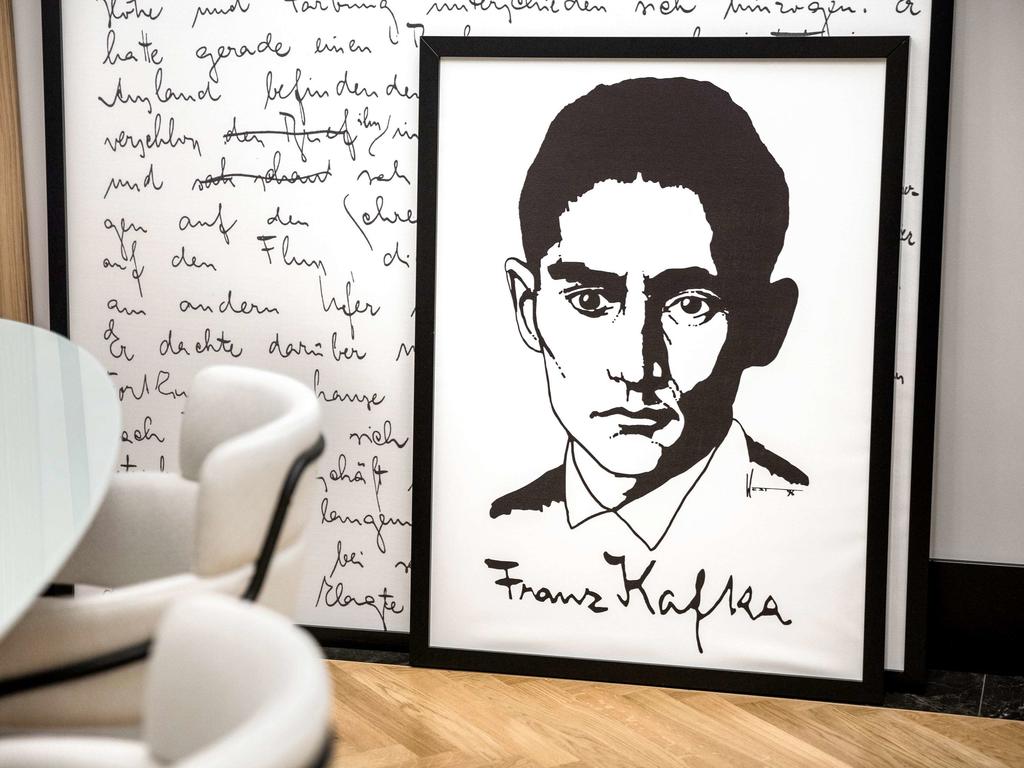
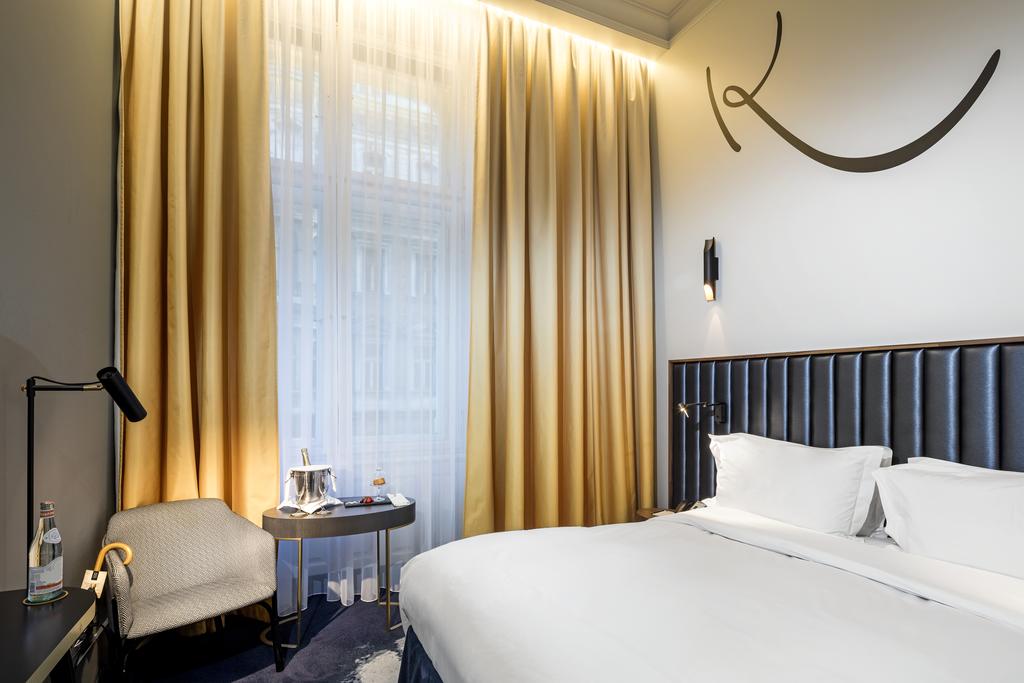
The 1894 building is now the Hotel Century Old Town Prague, part of the MGallery Collection, renovated in 2017. There’s a bust of Kafka at the entrance and, by the bar, a bookcase with his books alongside other Czech writers. His old office is room 214, and there’s a plaque to prove it. I’d recommend the hotel anyway: it’s one of the best in the centre.
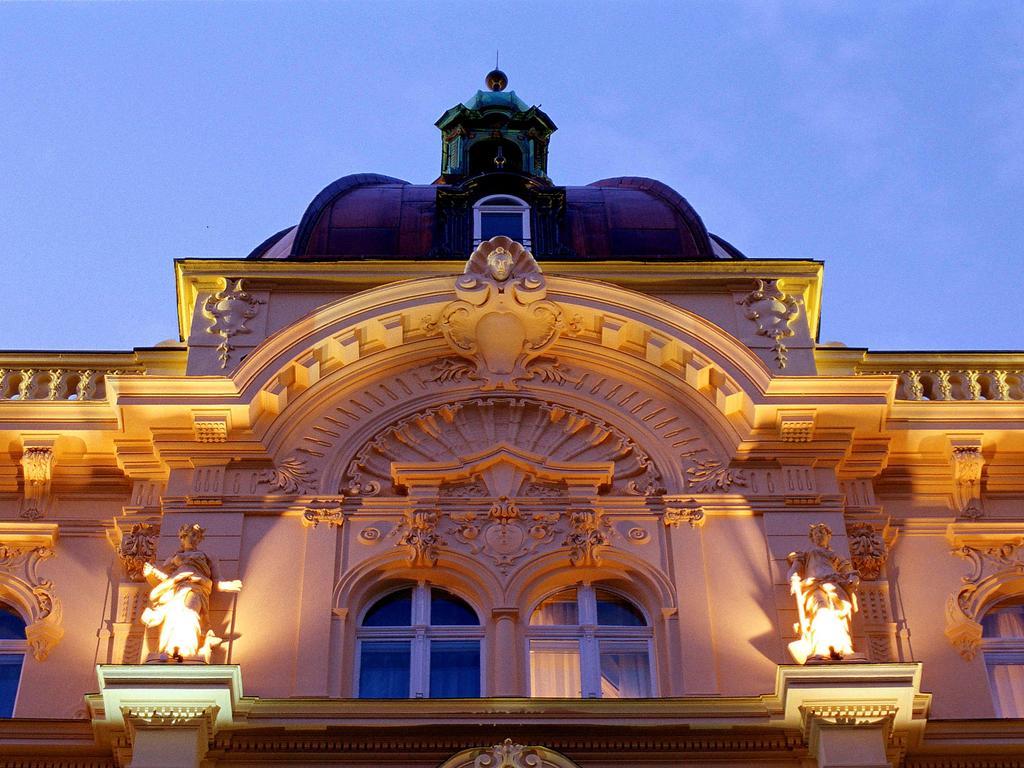
Café Arco and Kafka’s other cafés
Five minutes away, at Dlážděná 6 near Masaryk station, Kafka and Max Brod used to meet at Café Arco, where German-speaking writers gathered. It’s where he met Milena Jesenská. The café closed long ago, but the sign is still above the door, with old photos and posters in the window. For lunch, Masaryčka, across the way, is a good place to try Czech food.
He also went to Café Louvre and the Café Imperial, and both are still open. One thing to know: whatever the sign says, he never set foot in the Kafka Café in the Old Town.
A Warhol Kafka at the Jalta
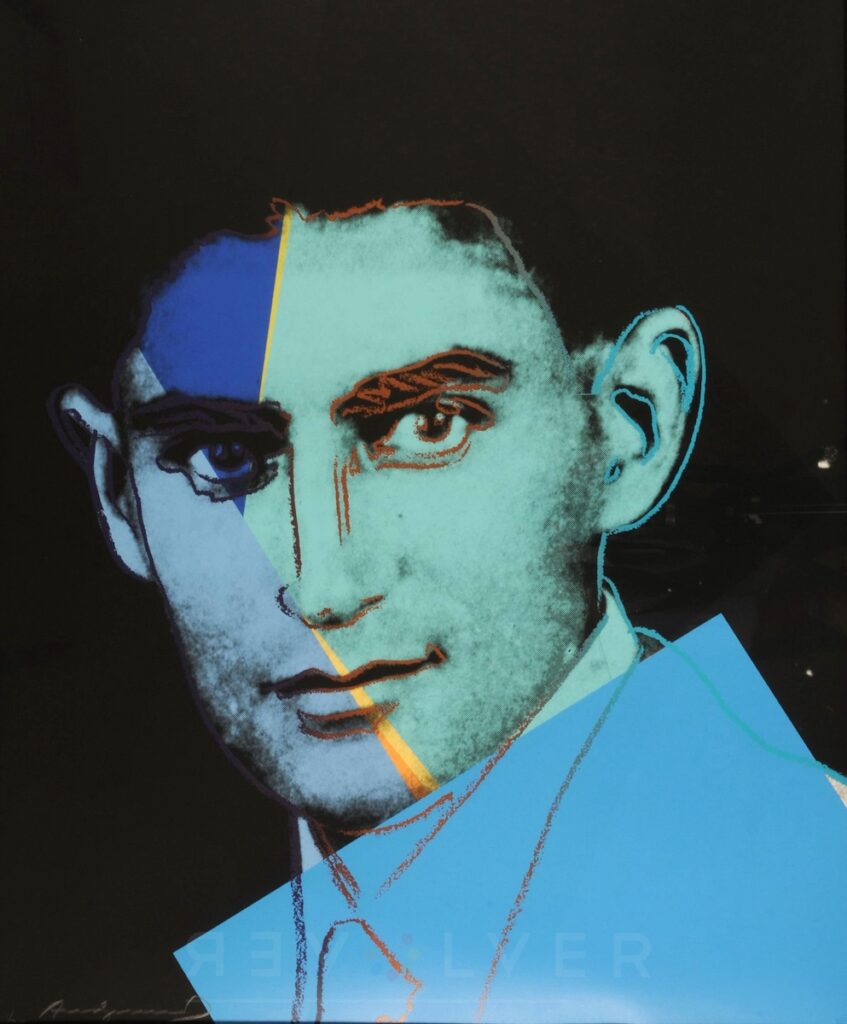
If you want a hotel with a past, the Jalta Boutique Hotel on Wenceslas Square has an original Andy Warhol silkscreen of Kafka in the lobby, from his 1980 series Ten Portraits of Jews of the Twentieth Century. The hotel also runs tours of its small Cold War museum, set in a 1950s nuclear shelter built for party officials. Kafka himself was more of an Imperial man.
3. The Kafka statue by the Spanish Synagogue
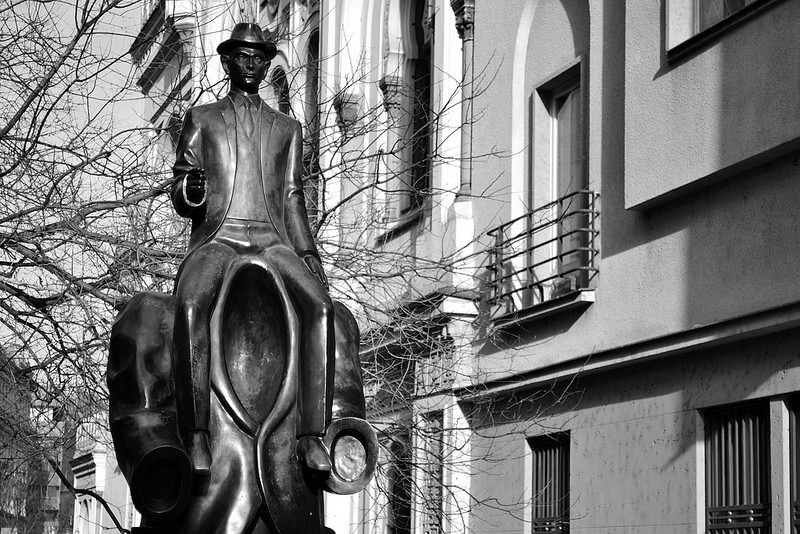
This bronze, almost four metres tall, has stood since 2003 next to the Spanish Synagogue, on the corner of Dušní and Vězeňská. The spot was chosen on purpose: it’s on the old boundary between the Christian Old Town and the Jewish quarter, Josefov. The synagogue also hosts short classical concerts (tickets here).
Prague waited 120 years after his birth to give him a statue, and his complete works only came out in Czech decades after his death. Both are thanks to the Franz Kafka Society, which publishes him in Czech and awards the Franz Kafka Prize. Philip Roth, refused entry to Czechoslovakia in the 1970s, and Haruki Murakami, author of Kafka on the Shore, have both won it.
The sculptor, Jaroslav Róna, took the image from one of Kafka’s early stories, Description of a Struggle: a small Kafka riding on the shoulders of an empty suit. Róna has said he wanted to show the split you feel all through Kafka’s writing. Rubbing Kafka’s foot is supposed to bring luck.
The rotating Kafka head by David Černý
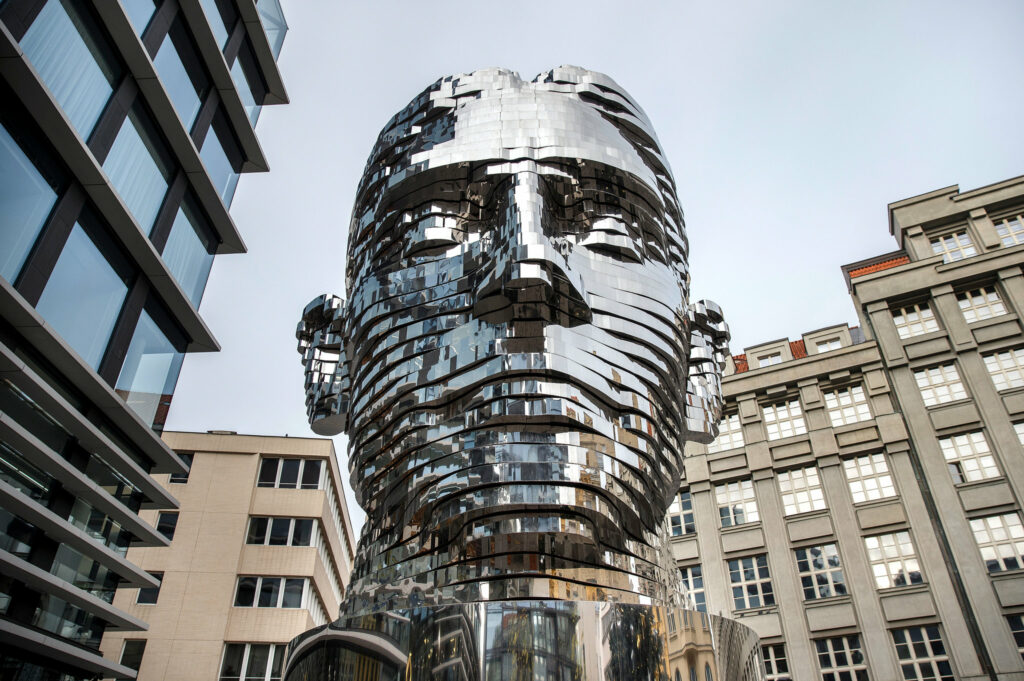
The most photographed Kafka in Prague has been turning since 2014 behind the Quadrio shopping centre, right above Národní třída metro station (Spálená 22). It’s over ten metres tall, weighs 39 tonnes and is made of 42 stainless-steel layers that rotate separately, so the face keeps breaking apart and coming back together, a nod to The Metamorphosis. David Černý likes to point out that it faces the headquarters of an administration that can be properly Kafkaesque. An earlier, mirrored version, Metalmorphosis (2007), stands in Charlotte, North Carolina.
4. The Franz Kafka Museum
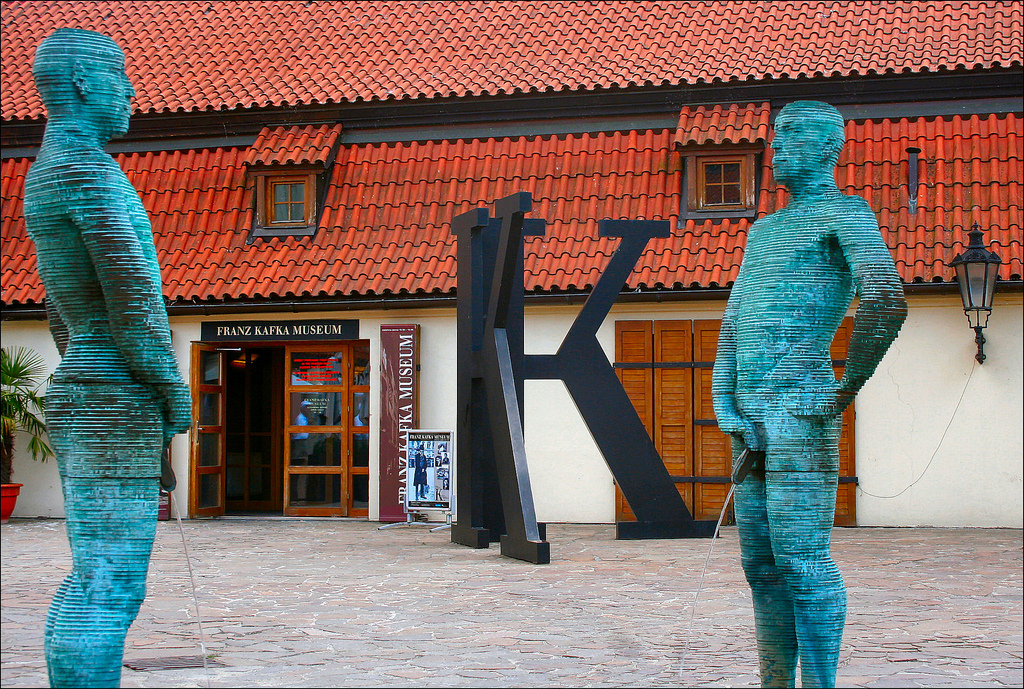
The museum is in Malá Strana, a few minutes from Charles Bridge, in the old Herget brickworks (Hergetova cihelna). In the courtyard, two more Černý figures relieve themselves into a pond shaped like the Czech Republic: that’s Piss. Inside are first editions, letters, diaries, manuscripts, photos and drawings. It’s a good place to start if you’ve never read him.
Franz Kafka Museum
Cihelná 2b
5. Kafka’s grave in Žižkov
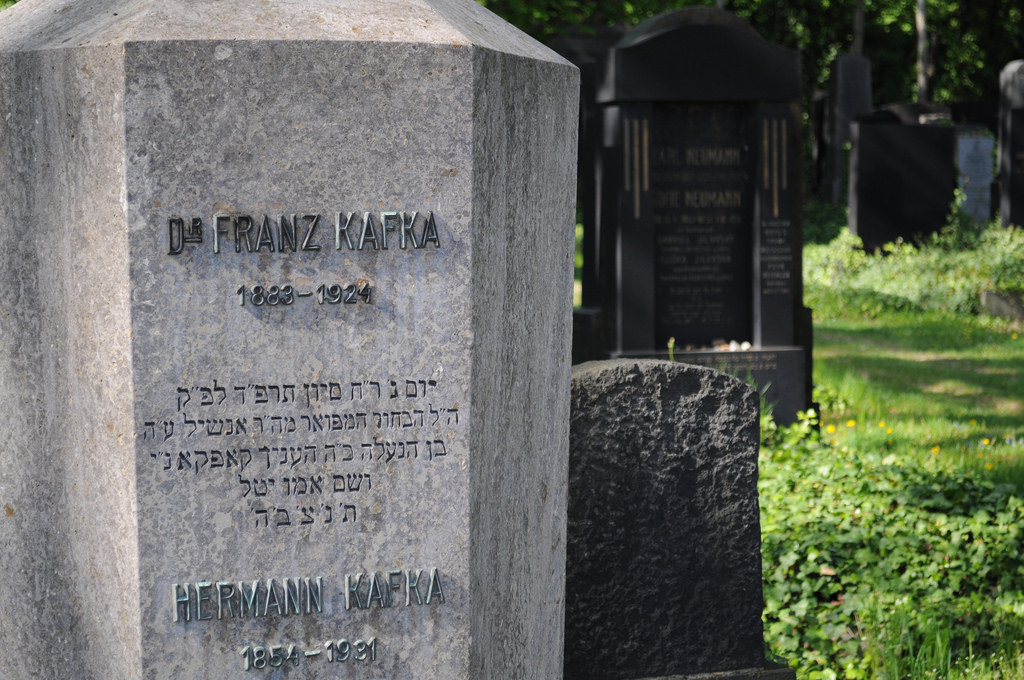
Kafka died on 3 June 1924, aged 40, at a sanatorium in Kierling, outside Vienna. He’d been diagnosed with tuberculosis in 1917 and had retired from the insurance office on health grounds in 1922. He’s buried in the New Jewish Cemetery in Žižkov (Prague 3), which opened in 1890, right by the Želivského metro and tram stop. The grave is signposted from the entrance: a cubist headstone shaped like a crystal, which he shares with his parents.
You’ll often have it to yourself. Many Czechs have never really taken to Kafka. He was banned under the Nazi occupation, out of favour after the war because he wrote in German, then sidelined by the communists, and was only properly rediscovered in the 1960s. If you’ve read him, it’s worth the tram ride.
New Jewish Cemetery (Nový židovský hřbitov)
Izraelská 1
April–October: Sun–Thu 9am–5pm. November–March: Sun–Thu 9am–4pm. Fridays 9am–2pm all year. Closed Saturdays and Jewish holidays.
Going further
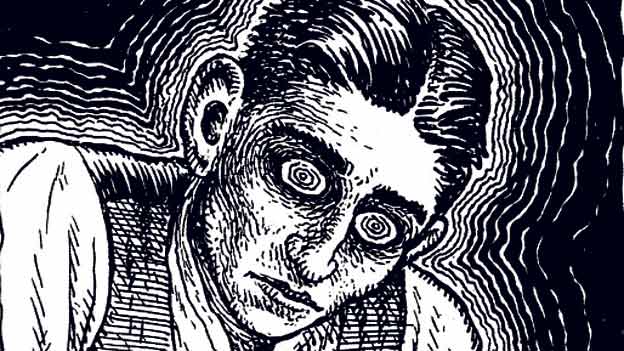
For film, there’s Steven Soderbergh’s Kafka (1991), with Jeremy Irons, and Richard Dindo’s documentary Who Was Kafka? (2006). For an easy way in, Introducing Kafka (1993) by David Zane Mairowitz and Robert Crumb is a comic-book biography. In Prague, the Franz Kafka Society at Široká 14 has a bookshop and a replica of Kafka’s library (open daily 10am–5pm, until 4pm at weekends).
And if you only remember one line of his, make it the one he wrote to his friend Oskar Pollak in 1904: “A book must be the axe for the frozen sea inside us.”