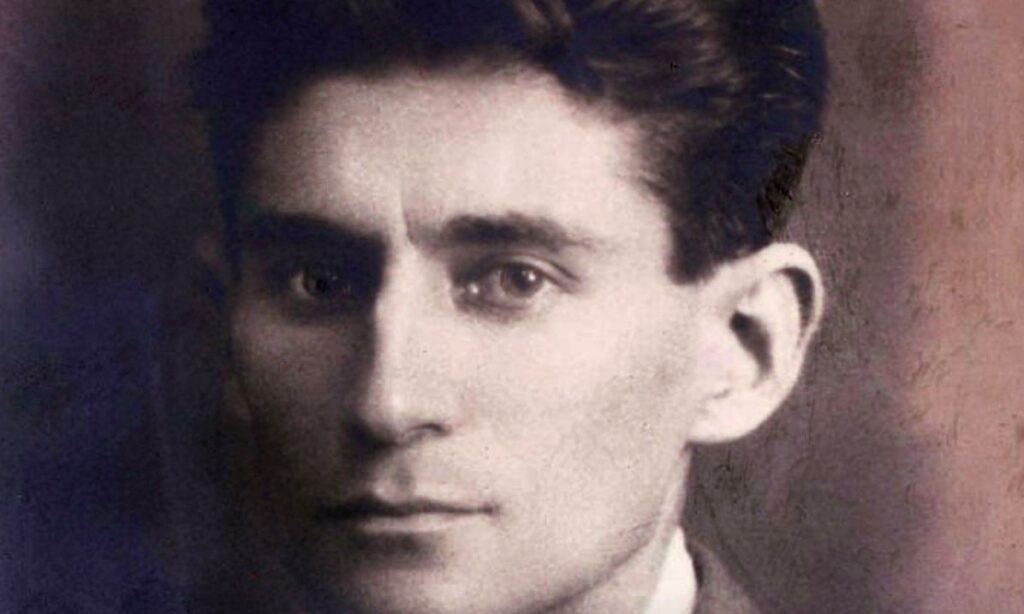
Franz Kafka (1883-1924) is inseparable from Prague. The great writer and the city are intimately linked, something I have come to realize over time. The famous German-language Czech novelist, one of the greatest authors of the 20th century, was born in Prague, where he spent his entire short life.
Little known during his lifetime, his seminal works The Trial and The Castle were only published posthumously thanks to his friend and executor Max Brod (who refused to burn all his manuscripts without reading them, as Kafka had requested in his last will and testament).
To better understand Kafka, you must visit Prague, and to better understand Prague, you must read Kafka!
Even today, walking through the streets of Prague, you can discover many symbols associated with Kafka, who was blacklisted by the communist regime. In this article, I’ll tell you everything you need to see, from the author’s birthplace to his gravestone, the cafes he used to frequent, and his former office, which has been converted into a hotel room (I’ll even give you the room number if you want to stay there!). A real «Kafka trail» to follow in Prague (enthusiasts can even take part in a tour to discover Franz Kafka in English).
«Prague won’t let you go, the little mother has claws.» I often hear these words of Kafka’s from my Czech friends, who are amused to see me continuing my long expatriation in Prague. Kafka himself tried to leave Prague to study in Munich in 1902. But he returned to his hometown a few days later…
Kafka never left Prague
Torn between his Jewish, German, and Czech identities, Kafka had a very ambivalent relationship with his city. But apart from a few rare trips to France and Italy and a stay in Berlin at the end of his life, Prague only let Kafka go once: when he left to die in a sanatorium near Vienna.
Kafka in Prague is not just about mugs, bags, or postcards bearing the image of the great poet of the absurd and anxiety. It is also about tangible traces to be discovered during a pleasant stroll through the streets of the Czech capital. Follow me!
1- Kafka’s birthplace in Prague
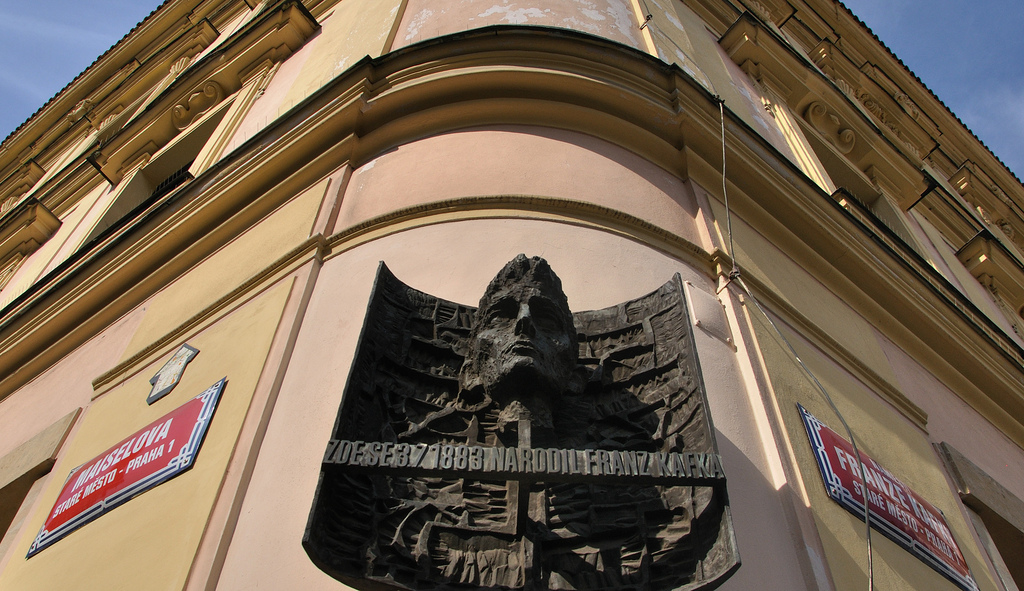
Franz Kafka was born on July 3, 1883, into a Jewish family in Prague’s Old Town. He was the first child of Hermann and Julie Kafka (Kafka means jackdaw, and it is quite common to have a bird’s name in the Czech Republic). Until 1885, the small family lived in a house right next to St. Nicholas Church on Old Town Square. You can easily see this house during your visit to Old Town Square. Today, it is home to Kafkoff, a café-gallery that pays tribute to Kafka and, in addition to hosting exhibitions, concerts, and meetings, is also a great place for brunch.
You can’t miss this house in the heart of the Old Town!
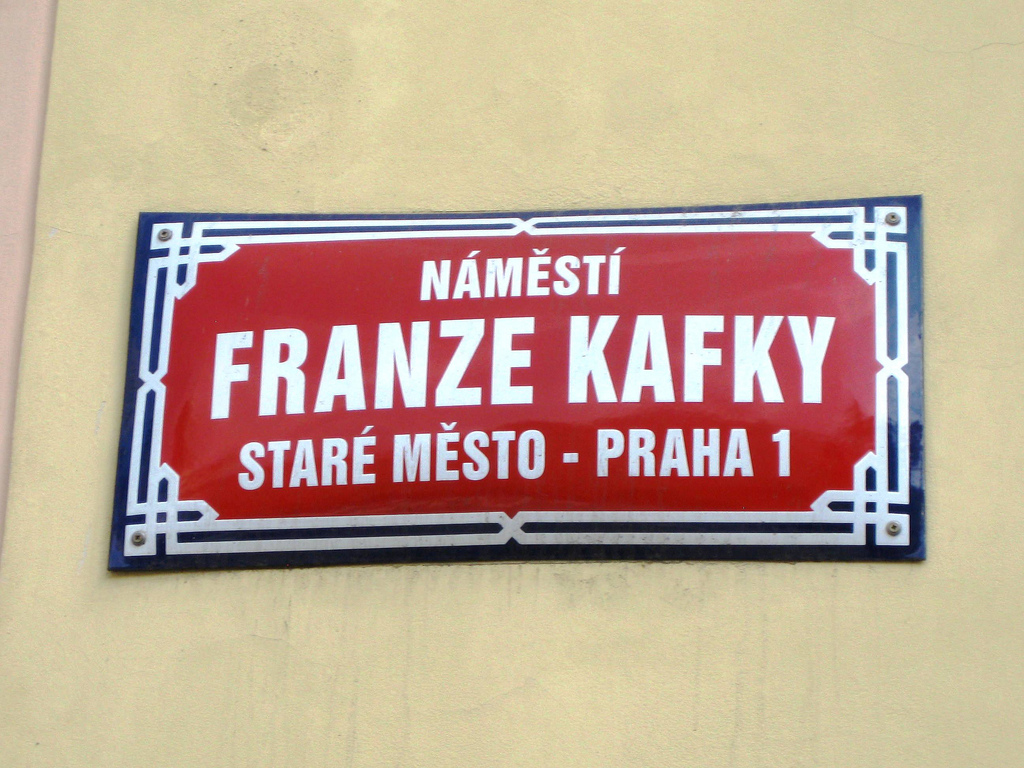
The house is located at the junction of U Radnice, Kaprova, and Maiselova streets, more precisely at No. 1 Franz Kafka Square (Náměstí Franze Kafky, named in 2000). Only the gate remains of the house where Kafka was born, following a fire in 1897. On the facade of the house, don’t miss the relief depicting the writer, created by the sculptor Hladík in 1966, three years after a famous Kafka symposium organized by a professor at Charles University. This symposium brought Kafka back into fashion after he was banned in 1948 by the communist regime, which condemned his decadence and pessimism.
The main houses inhabited by Kafka in Prague
The Kafka family moved frequently, but always within a very small area of the Old Town.
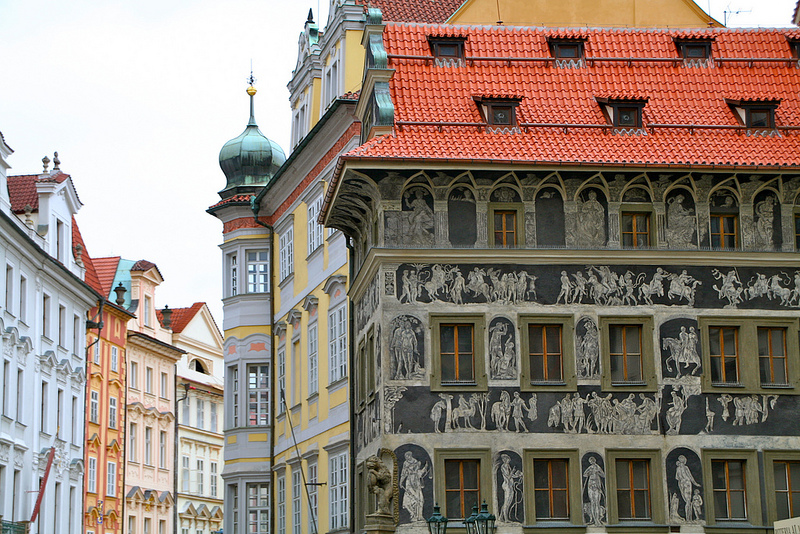
- Between 1889 and 1896, they lived in the medieval house U Minuty at No. 2 Old Town Square, just a few meters from little Franz’s birthplace. It is easy to find, as it is one of the most beautiful houses on the square with its magnificent sgraffito (which was covered with plaster during the Kafka era). It was in this house that Franz’s three sisters were born (all three died in death camps during World War II).
- The Kafkas then lived in the House of Three Kings, also on Old Town Square, from 1896 to 1907. From 1893 to 1901, Franz attended the German high school, which was located at the time in the Kinský Palace, on the ground floor of which his parents ran a haberdashery shop. It was in this house that he wrote his first novel. Legend even has it that the window of his bedroom overlooked the choir of the Church of Our Lady before Týn!
- Between 1907 and 1913, the Kafka family lived at No. 30 Pařížská Street, on the 4th floor of the Art Nouveau building U Lodi, which was destroyed at the end of World War II during the Prague Uprising (today, it is home to the Fairmont Golden Prague, the former InterContinental Praha hotel built in 1974). It was here that he wrote The Metamorphosis.
Many of these addresses are very easy to find in the heart of Prague!
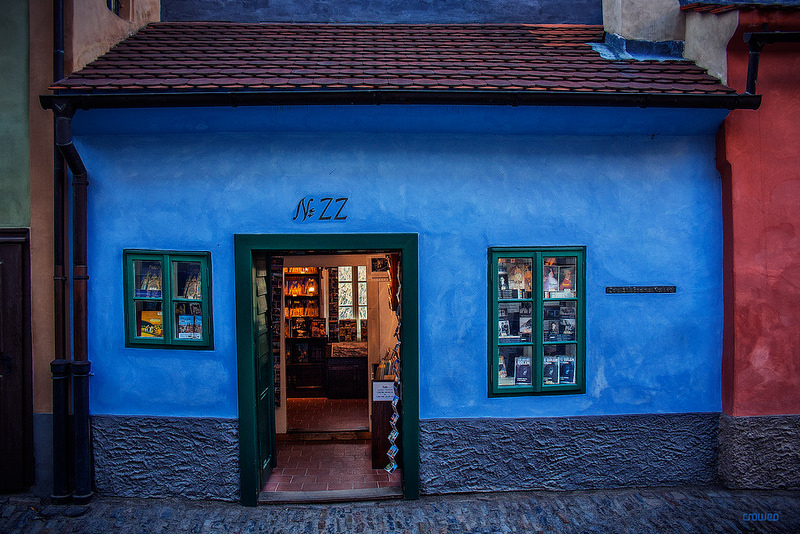
- Kafka also lived at No. 2 Celetná Street and, in 1916-1917, he worked in the cottage rented by his sister Ottla at No. 22 Golden Lane, the famous street of alchemists in Prague Castle, now overrun with tourists. A cottage converted into a bookshop is dedicated to the author.
- He then rented a two-room apartment in the Schönborn Palace (Tržiště 15), which today houses the U.S. Embassy and where he fell ill with tuberculosis.
- Finally, his last home in Prague was the family apartment in the Oppelt House (Oppeltův dům, Staroměstské náměstí 5), on the corner of Old Town Square and Pařížská Street. The Kafkas lived on the top floor of this building, whose ground floor is now occupied by the Cartier jewelry store.
Kafka’s favorite cafés in Prague
In addition to the Louvre and Imperial cafés, Franz Kafka frequently visited the Arco café with his friend Max Brod. It was there that he met Milena Jesenská, one of the women in his life. It was also there that many German intellectuals used to meet. The Arco café sign is still clearly visible at No. 6 Dlážděná Street, near the beautifully renovated Masaryk Station (Masarykovo nádraží). Unfortunately, the café is now closed. All that remains of its glorious past are a few photos and posters in the window (opposite, Restaurace Hybernská is a great place to discover Czech cuisine). In any case, a word of warning: Franz never set foot in the Kafka café in the Old Town! Instead, opt for the real institutions that are the Louvre café or the Imperial café.
2- Kafka’s office has become a hotel room!
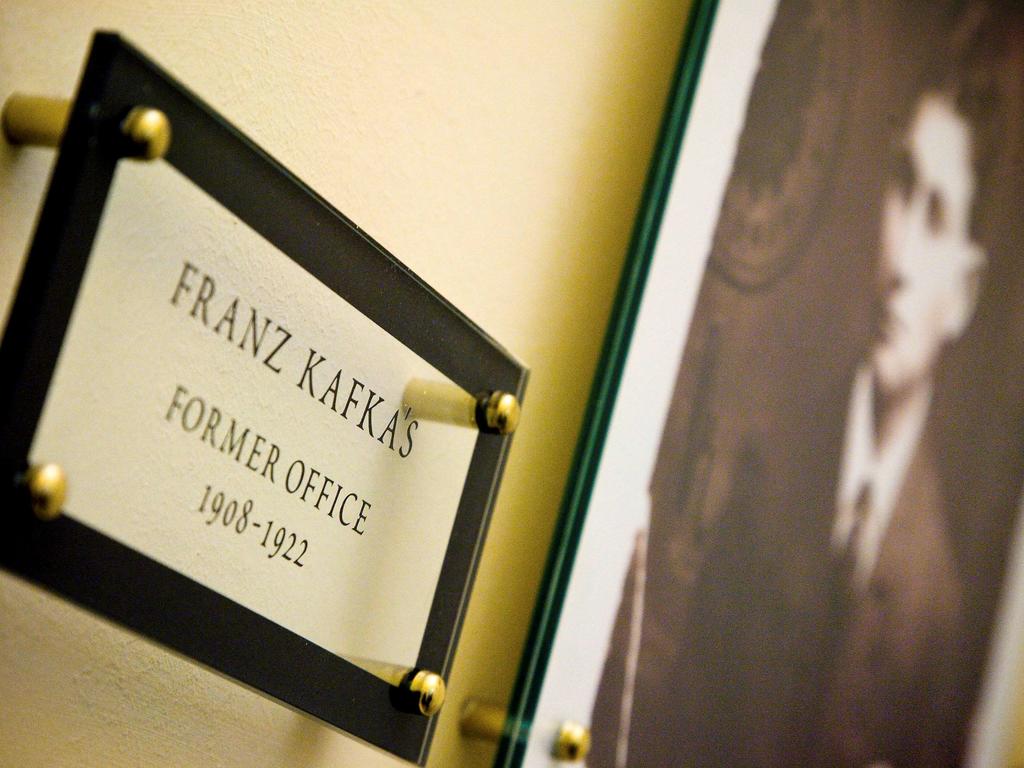
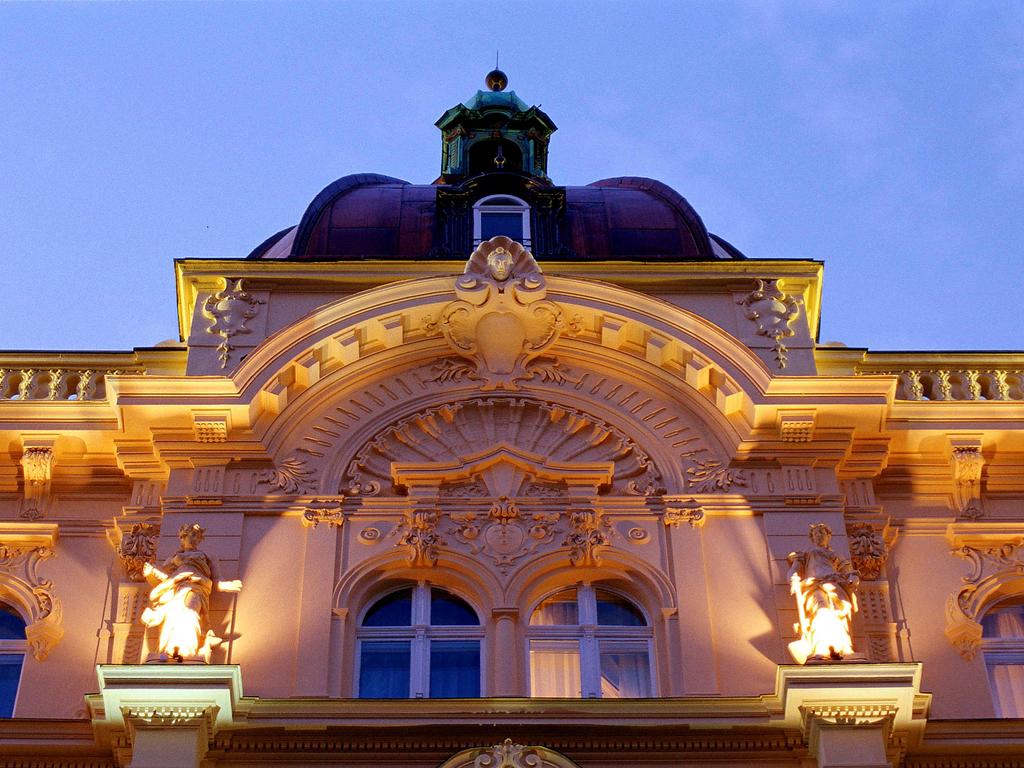
Close to Café Arco, there is another trace of the writer at No. 7 Na Poříčí Street. This was the address of the accident insurance company where Franz Kafka worked as an accountant between 1908 and 1922 (after studying law, he also worked as an intern in an office in the Clam-Gallas Palace and, in 1907, for the Prague branch of the Italian insurance company Assicurazioni Generali (in the imposing and unmissable salmon-colored neo-baroque palace on the corner of Wenceslas Square and Jindřišská Street). The building on Na Poříčí Street, built in 1894, also in the neo-baroque style, now houses the Hotel Century Old Town Prague (MGallery by Collection) ( the MGallery, renovated in 2017, is a hotel that I highly recommend!). At the time, it was the workers» insurance company (Dělnická pojišt’ovna) for which Kafka worked for many years as a clerk. His job was to limit the risks incurred by workers who operated often dangerous machinery. Having to contest claims for compensation sometimes gave him a guilty conscience, but his work was appreciated and he was promoted several times for what was for him just a «bread and butter» job that allowed him too little freedom to write in the evenings. Kafka regretted that a business trip led him to «rush» the ending of The Metamorphosis. In any case, the time Kafka spent at this insurance company played a decisive role in shaping his literary career, as the bureaucratic environment and themes of deadlines, sick leave, and office culture profoundly influenced his writing.
In the hotel, a plaque marks what was once Kafka’s office
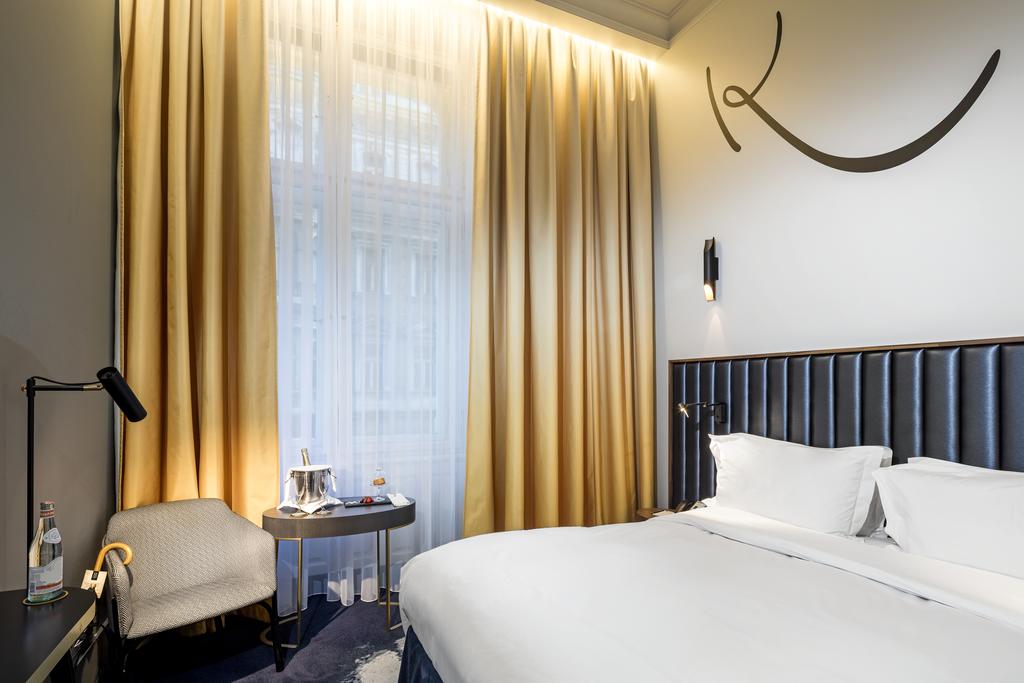
At the entrance to the splendid neo-baroque Hotel Century Old Town Prague (MGallery by Sofitel), there is now a bust of Kafka and, next to the bar, a library with, you guessed it, Kafka’s books, but also novels by the greatest Czech writers. As for his former office, it is now room 214 of the hotel (a commemorative plaque is there to remind you). I highly recommend staying here, as this establishment is known to be one of the best hotels in the city center!
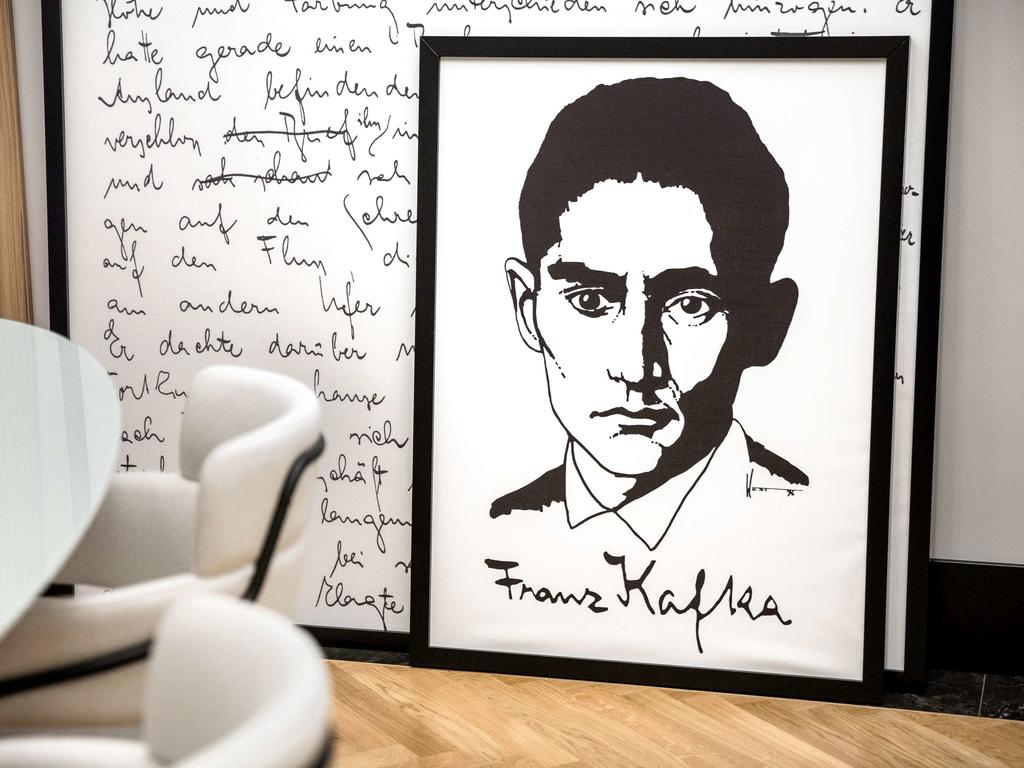
Andy Warhol’s original silkscreen print of Kafka in a hotel lobby
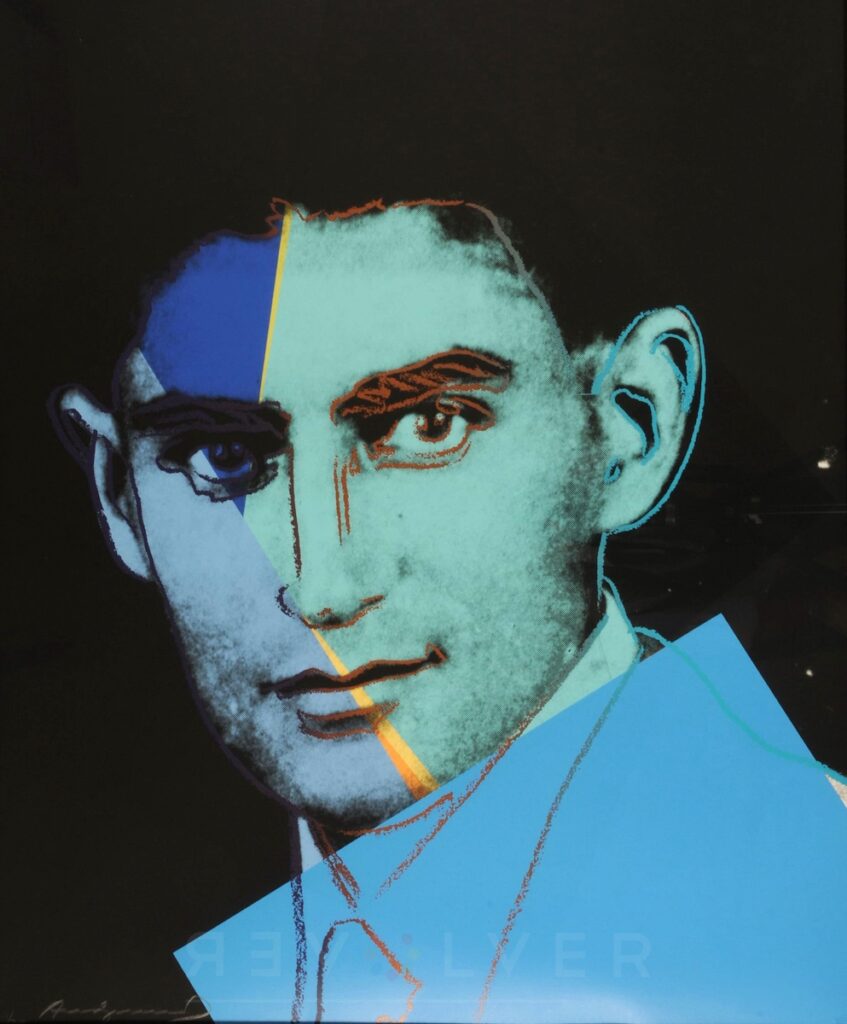
If you want to stay in a hotel with a rich history, why not try the Jalta Boutique Hotel? In addition to this original Warhol silkscreen print (whose parents were from northeastern Slovakia, then part of Austria-Hungary), the hotel also offers a tour of a small Cold War museum and a 1950s fallout shelter intended for communist dignitaries. As for Kafka, he was more of a client of the sumptuous Art Deco Imperial Hotel.
3- The statue of Kafka near the Spanish Synagogue
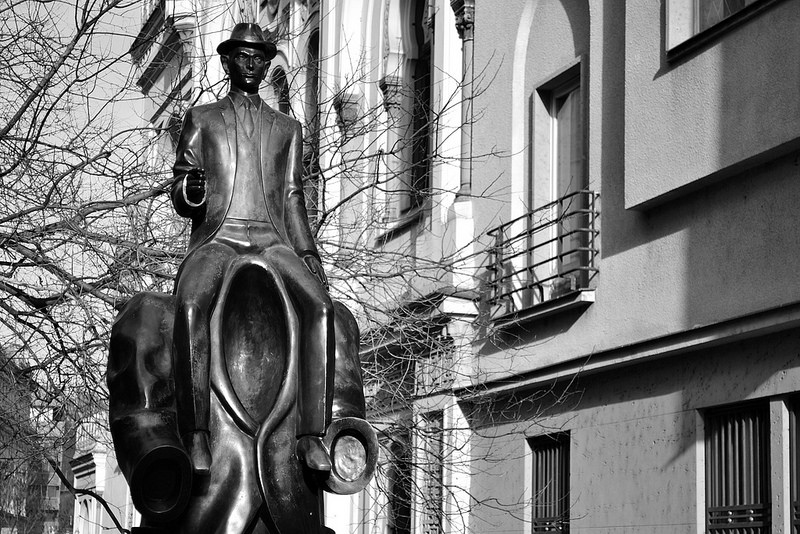
This 4-meter-high bronze statue has stood since 2003 next to the Spanish Synagogue (where lovely little classical concerts are held, tickets available here), in a very symbolic location in Prague, at the corner of Dušní and Vězeňská streets, where the border between the Christian Old Town and the Jewish quarter of Josefov used to be.
A highly symbolic location
It took 120 years for Prague to finally honor its greatest man of letters, whose complete works were only translated late in life. The Franz Kafka Association, which publishes his complete works and awards a Kafka literary prize (Philipp Roth, banned from Czechoslovakia in 1975, and Haruki Murakami, author of Kafka on the Shore, are among the winners), is behind this original statue by Jaroslav Róna, for whom «the statue expresses the inner turmoil the inner division found in Kafka’s texts.» The writer is seated on the shoulders of a man whose coat is all that can be seen… Superstitious people take note: touching Kafka’s feet is said to bring good luck…
The statue of Kafka by David Černý
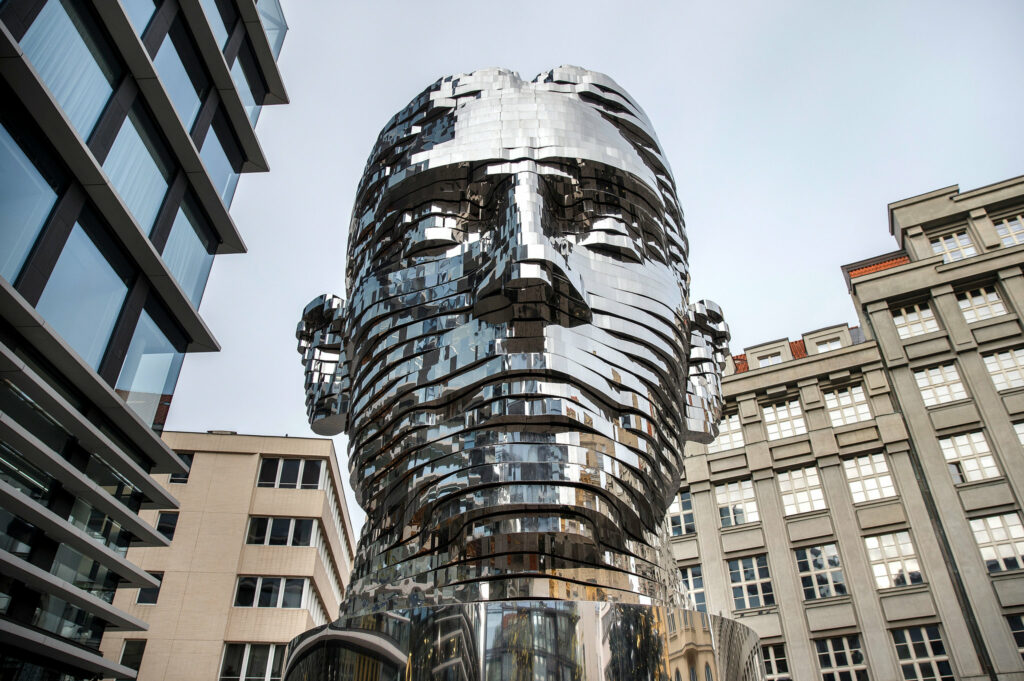
This statue, which is very popular with tourists and has been photographed constantly since 2014, is also located in the city center, at the Národní třída metro station, on a small square (Spálená 22) behind the Quadrio shopping center (Tesco). It depicts Kafka’s head and refers to the work The Metamorphosis. The whimsical David Černý also likes to point out the irony of seeing it facing the headquarters of an administration that can sometimes be Kafkaesque.
Opposite an administration that can sometimes be Kafkaesque
The statue, which is 10 meters high and weighs 39 tons (and has its counterpart in the American city of Charlotte with the work «Metalmorphosis»), is made up of 42 movable chrome plates that move, constantly reshaping Kafka’s head. A work of art not to be missed!
4- The Kafka Museum
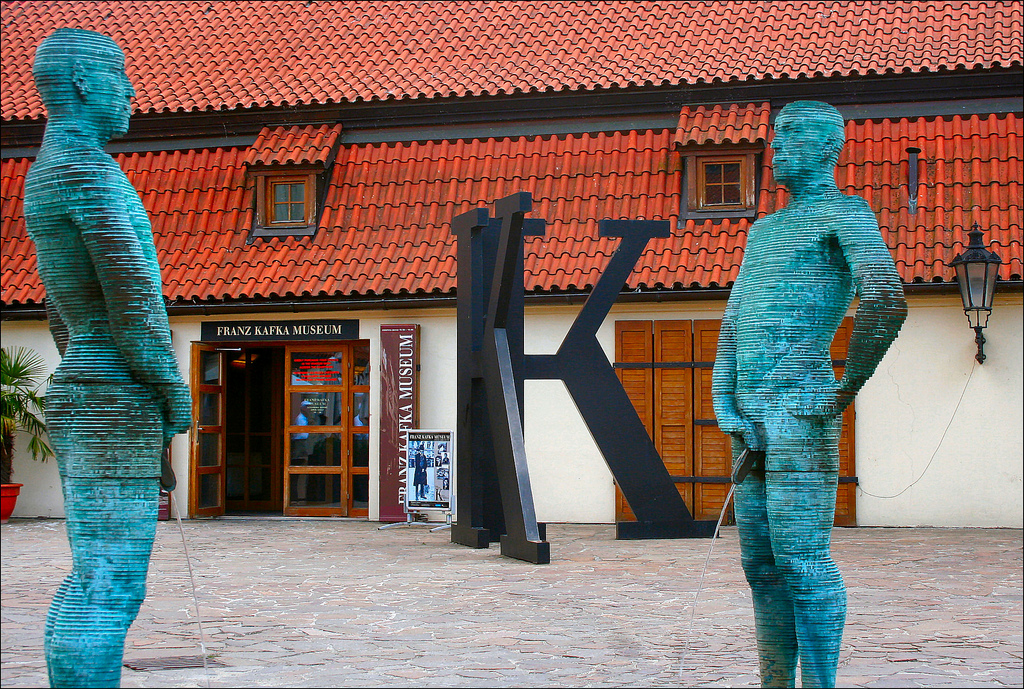
Opposite another provocative statue by David Černý(the «Piss» statue) and in the beautiful site of the former Hegel brickworks, is the Kafka Museum. It is located a few meters from Charles Bridge, in the Malá Strana district. This museum (tickets here) will introduce you to Kafka’s original works as well as his correspondence, diaries, manuscripts, photographs, and drawings… Very informative for those who are unfamiliar with this great 20th-century author.
Franz Kafka Museum
Cihelná 2b
5- Kafka’s grave in the Jewish cemetery in Žižkov
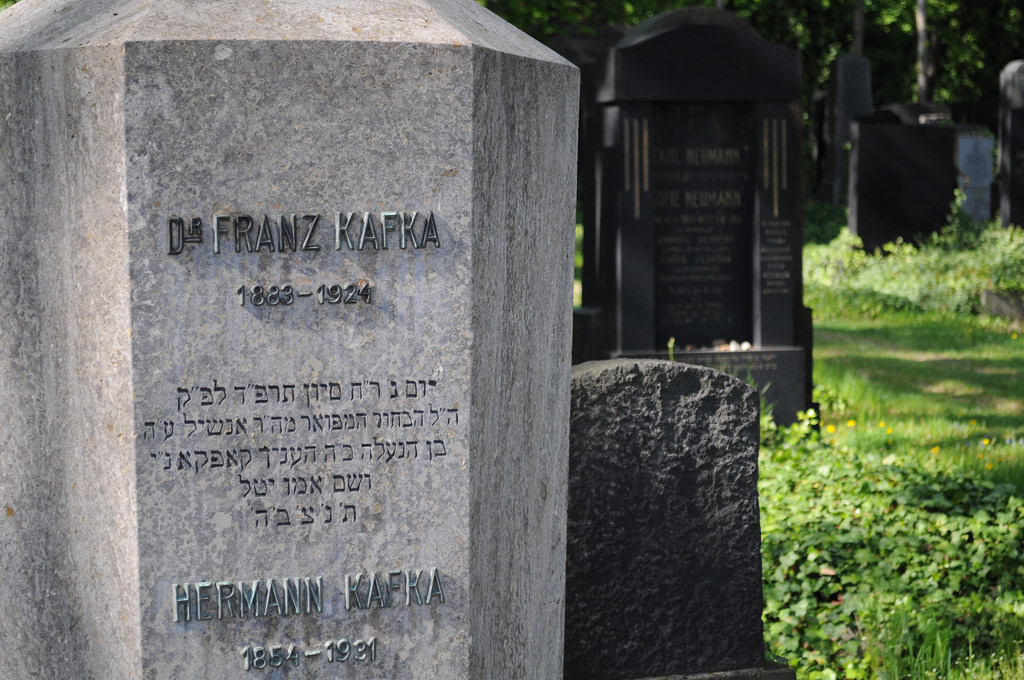
This is Franz Kafka’s final resting place in Prague after his death in a sanatorium near Vienna in 1924 at the age of 40 (he suffered from tuberculosis throughout his life and took early retirement due to illness in 1922). The anonymous grave is located at the far end of the «new Jewish cemetery» in Žižkov (1890) in Prague 3 (the grave is near the Želivského metro and tram stop).
A walk away from the tourists in the Old Town Square
You probably won’t meet anyone there, neither tourists nor Czechs. It’s true that Kafka, a German-speaking Jewish writer, is not very popular among Czechs: banned when Prague was occupied by the Nazis, rejected after the war due to strong anti-German sentiment, sidelined by the communists… He was only rediscovered later in life. But for literature lovers, it’s moving and well worth a visit!
New Jewish Cemetery (Nový židovský hřbitov)
Izraelská 1
Nov.-March: Fri.-Sun. 9 a.m.-4 p.m. (2 p.m. Fri.); Apr.-Oct. Fri.-Sun. 9 a.m.-5 p.m. (2 p.m. Fri.)
To learn more about Kafka
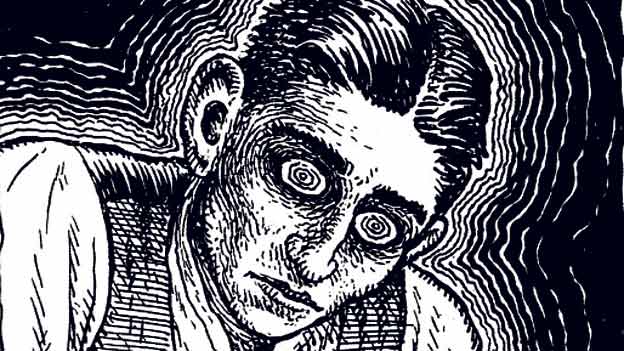
If you are interested in Franz Kafka, I recommend Steven Soderbergh’s film Kafka (1991) or Richard Dindo’s documentary Who Was Kafka? (2006). In terms of books, Robert Crumb’s graphic novel Kafka (2006) is also very interesting. Finally, I recommend visiting the Franz Kafka Society, which has a bookshop and houses a replica of Kafka’s library (daily 10 a.m.-5 p.m., 4 p.m. on weekends, Široká 14).
5 quotes from Kafka
- «Man’s growth does not take place from the bottom up, but from the inside out.»
- «The mind is not free until it has let go.»
- «The gaze does not capture images; images capture the gaze. They flood the consciousness.»
- «We should only read books that sting and bite us. If the book we read doesn’t wake us up with a punch to the skull, what’s the point of reading it?»
- «Let us express man’s despair in the face of the absurdity of existence.»