Avoid all the little scams and find the best exchange offices
"Where do you change your euros in Prague?" (because you'll lose out if you change them in your country). This is often the first question my friends or people booking a guided tour with me ask me before arriving in Prague. With this article:
- Avoid the big and small scams that await tourists in Prague
- You'll also avoid high bank charges for credit card withdrawals in Prague
- You'll find out where to change your euros into Czech korunas at the best possible rate, with a map of the most useful and honest exchange bureaus!
What currency is used in Prague?
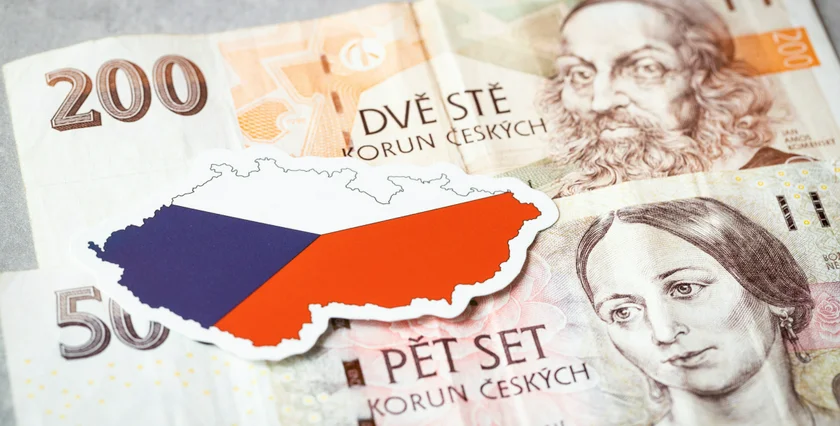
In the Czech Republic, we don't use euros but crowns, because although the country is part of the European Union, it is not, like other countries, part of the euro zone. The Czech Republic is constantly putting off adopting the euro. The Czech economy is doing quite well, so there's no reason for that to change. There is no political or popular will, and economists are divided. However, the Czech President suggested it during his televised greetings in 2024.
The exchange rate varies considerably, but reckon on approximately 24 crowns to 1 euro.
Tip: You can find today's EUR/CZK exchange rate here.
For €100, you should get almost 2,400 CZK in return, no less! If you hear 1,200 or 1,500, run away!
In this short video (in English), you'll see that, just a few meters apart, two exchange offices can charge very different rates, with a potential loss of 20-30 EUR for you! Be careful, as the 0% commission displayed often smacks of a scam, so always ask how many Czech crowns you'll receive.
In the event of a scam: If you feel you've been cheated, you can cancel a transaction within three hours, up to a limit of 1,000 euros (see below). Be sure to ask for a receipt!
Good to know : In Czech, Czech koruna is called česká koruna.
Tip 1: To avoid bank charges, change your euros into Czech crowns in Prague
The fees charged by foreign banks following a withdrawal from an ATM in Prague are not to be overlooked. In general, your bank will charge you €3 per withdrawal, around 3% of the amount withdrawn, i.e. €3.90 in fees for €30 withdrawn or €6 for €100.
Very important : Always refuse the conversion offered by an ATM (but also by a shop or restaurant). Never accept it – you'll lose out big time!
Another scam to avoid: Avoid like the plague the many, many ATMs marked "ATM Euronet". It's a big scam, as you'll learn in this video! You can lose up to 30% of your money! You'll be charged a EUR 4 transaction fee for each transaction, plus a conversion commission rate of around 15% (to which you must add any bank charges). You'll even be charged for checking your balance, which, to top it all off, won't even appear (see here)!
Spotting them : These "thieving" cash dispensers are often embedded in the facade of a hotel or business, or even illegally in a monument!
If you pay with your French bank card, your bank will probably charge €1 per payment and 3% of the amount
Before you leave for Prague: Google the key words "tariffs + the name of your bank" to find out the fees charged by your bank (some banks nowadays apply very low or modest fees. For example, when I pay in a euro zone country with my Czech bank card and a koruna account, I don't have to pay any more fees, but I do for a cash dispenser withdrawal.
To find out how much it costs to withdraw cash from an ATM or make a payment in koruna, see"Cash withdrawals outside the euro zone" and"Card payments outside the euro zone".
Tip : To avoid these fixed exchange fees, I suggest you bring euros with you and exchange them in Prague. I recognize that for security reasons, some people may prefer to use a bank card, even if it means losing a little money, but it's the most economical solution. You can also use the Revolut card, which avoids exchange fees and is becoming increasingly popular for travel.
Tip 2: Don't change all your money at Prague airport!
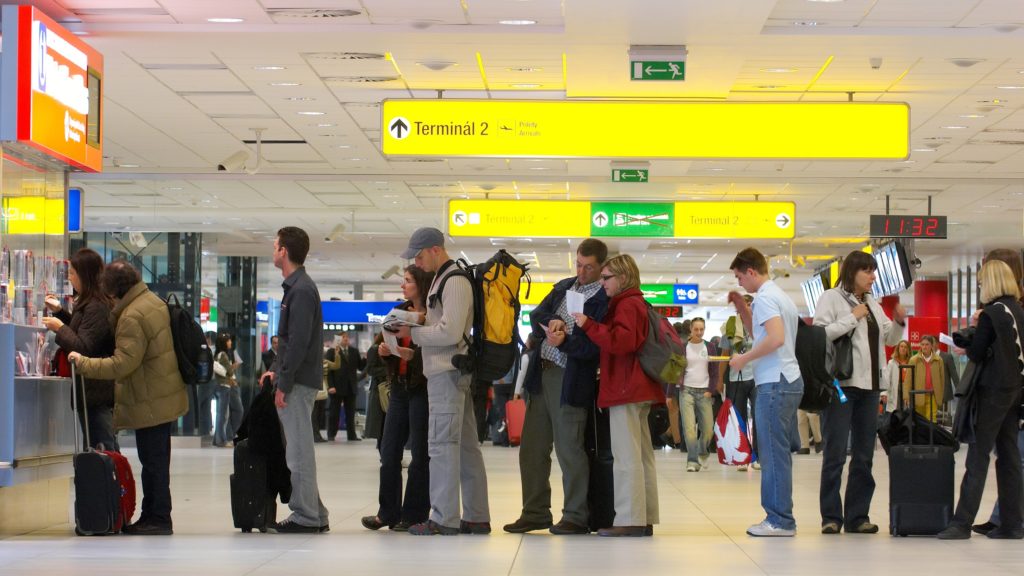
Don't use the exchange offices at Prague airport to change large sums of money into Czech crowns. At the airport, you're on the verge of a tourist scam. Rates are much higher than in downtown Prague.
What to do: Change only a small amount to pay for your cab or bus ticket (the machines at the bus stops in front of the terminals also take credit cards). Take 59 or 100 to get to the metro and city center). These first crowns will also enable you to make your first small expenditure once you've arrived in the center of Prague, where you can then change a larger sum.
Tip: You can also withdraw money from this ATM at the airport, which is run by an official bank, but never use a Euronet ATM! As mentioned above, it's a guaranteed scam!
Tip 3: The best exchange offices in Prague are in the city center and in the Central Station district
I always recommend to my friends the exchange office on Jindřišská Street, just before the Central Post Office (which you absolutely must enter!) In front of this exchange office, I often see a small crowd of tourists queuing up, which is a good sign. For a long time, it was the best exchange office in Prague.
Other good places : I've recently discovered three others with even better rates: two right next door, on Panská Street, at no. 4 with Azul Praha and no. 6 with Change RYM, but you can also find MI RYMAS Exchange (Václavské náměstí 19) or Exchange Praha in the Old Town (Jakubská 12).
Exchange offices in Prague
- Jindřišská 12
- Panská 4 et 6
- Václavské náměstí 19
- Jakubská 12
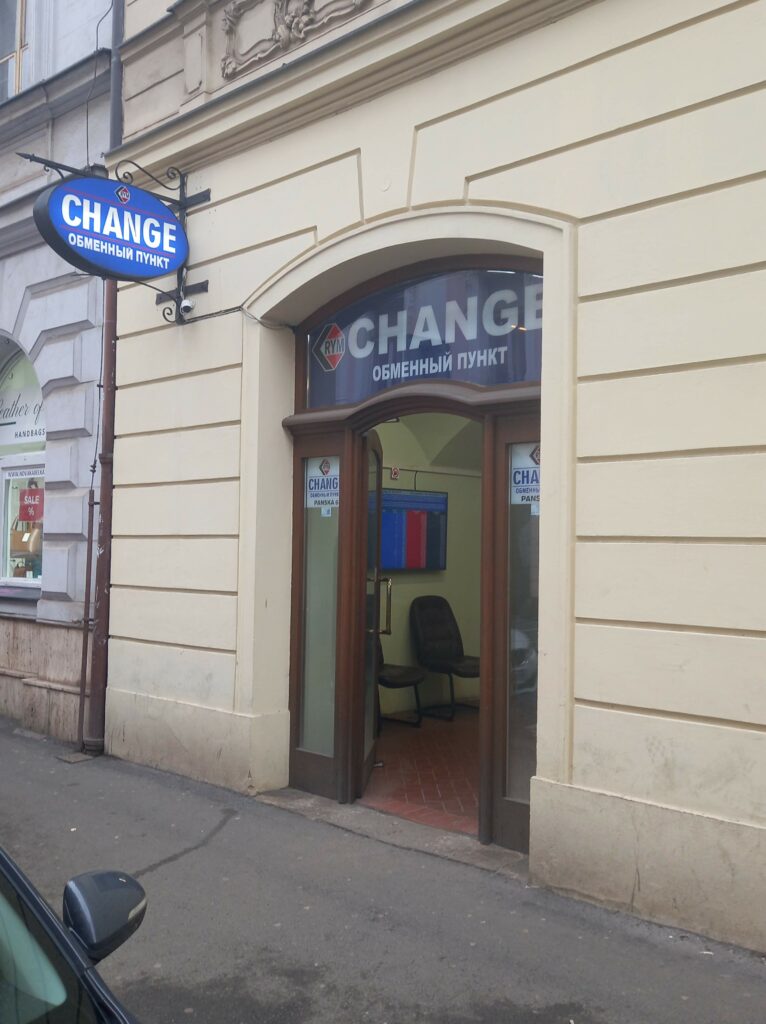
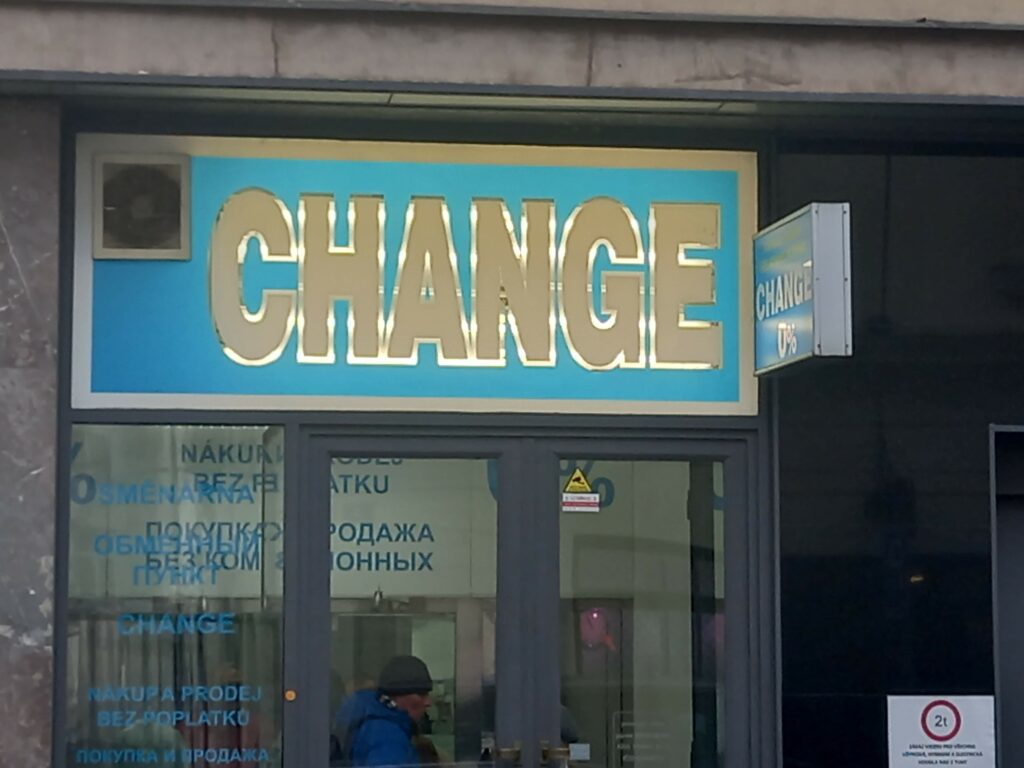
Here's a map of honest exchange offices!
Tip 4: In Prague, don't pay in euros!
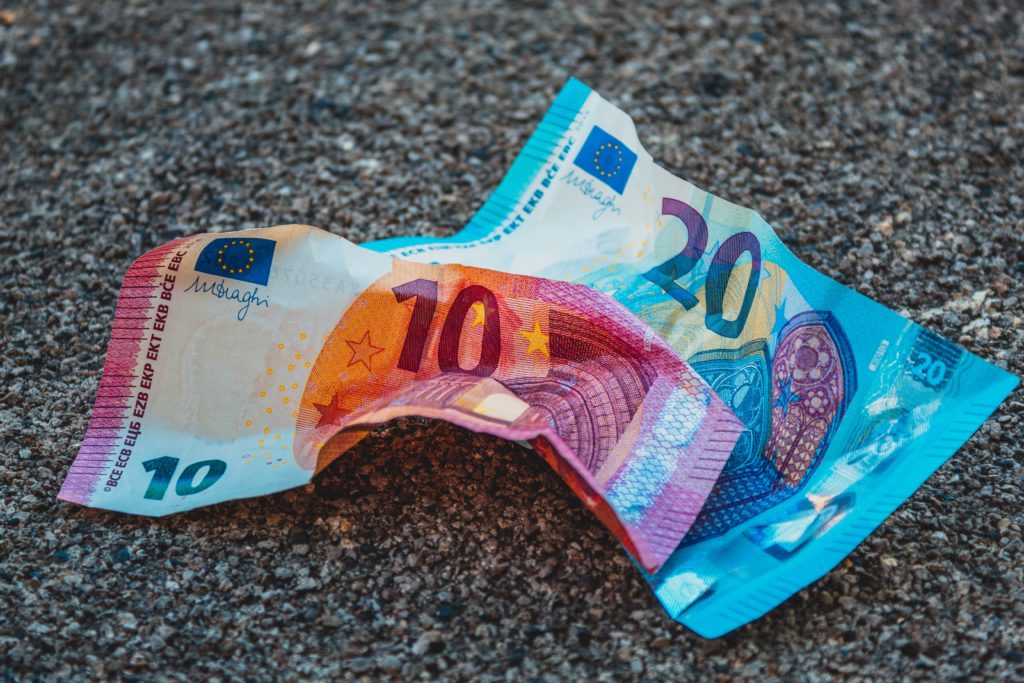
In a store or restaurant, you'll sometimes be offered the chance to pay in euros , but you'd better avoid it, because you'll always lose out (exceptionally, some establishments will offer you 25 CZK for 1 EUR! But this is very rare and new). The exchange rate in a hotel, supermarket or restaurant will always be frankly to your disadvantage, and not as good as the one you'd get in one of the best exchange offices in the Czech capital mentioned above.
Tip 5: Beware of scams! Never change money on the street!

It's becoming increasingly rare, but around the busy Wenceslas Square or Old Town Square, you may be offered a chance to change money on the street. Always decline, or you'll be swindled! You could even end up with crowns from the First Czechoslovak Republic (1918-1938 – we're very nostalgic here, but still…) or from a neighboring Slavic country, which will only be of value to numismatists… You've been warned!
Final tip: Make sure you have small denominations!
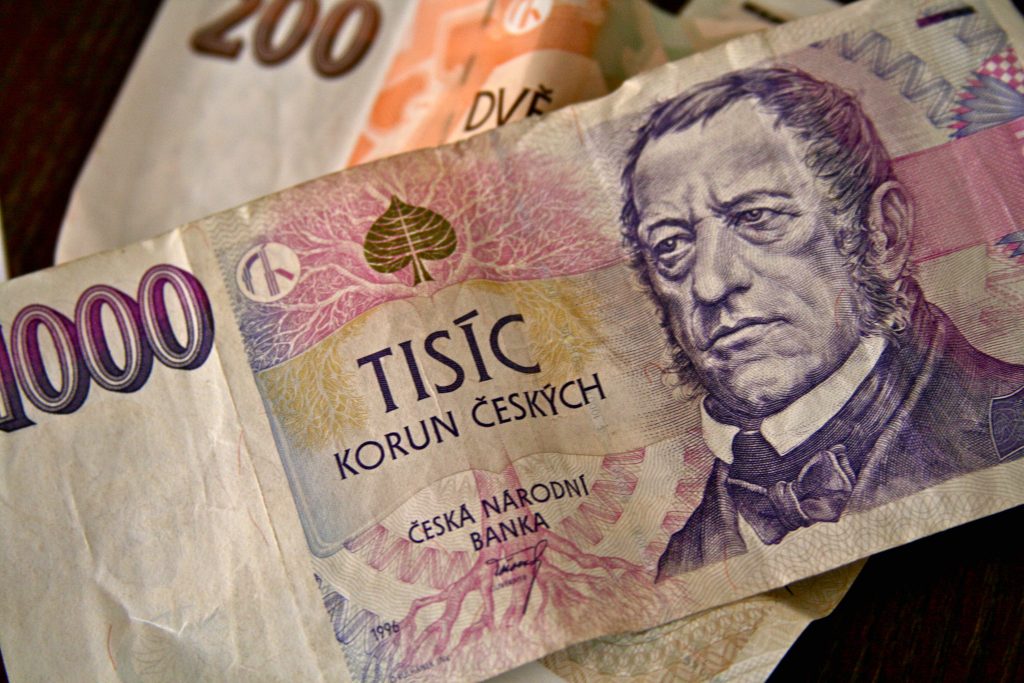
Czechs don't always win a thousand and one. So, in a store or café, if you hold out a 1,000 crown bill (the equivalent of 40 euros), you'll often be asked if you have anything smaller. Another cultural difference is that if you hand over a crumpled bill, people will huff and puff before smoothing it out in front of you, grumbling.
Tip: During your stay in Prague, always remember to keep some spare change to pay for public toilets, a streetcar ticket, a coffee or any other small everyday expense.
New law: 3 hours to change your mind and get your euros back
The Czech Parliament has passed a law to protect tourists from exchange bureaus that rip them off. Reminder: some bureaux in Prague will only give you CZK 1,600 for a €100 bill, when the exchange rate is CZK 2,400.
Return your Czech crowns and ask for your euros back
If this happens to you and you realize within a few hours that you've been scammed, Czech law will protect you. You then have three hours in which to ask for your euros back (the law is written on the exchange ticket, which you should keep carefully).
- Return to the exchange office,
- Return your crowns
- Ask for your euros back
- This time, change at a bureau de change offering a better rate
If the foreign exchange dealer refuses to comply, keep a video record of the incident and send it to the central bank. Avoid getting into trouble by simply exchanging money at the right exchange offices from the start!
A brief introduction to Czech currency
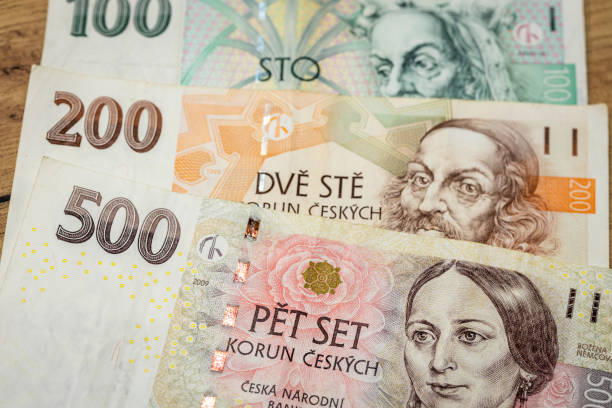
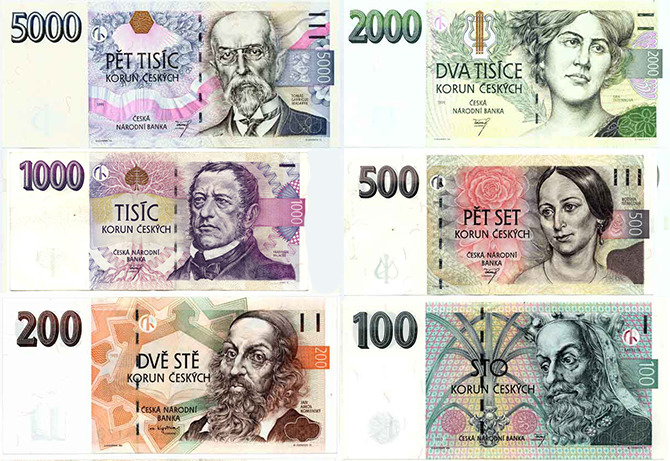
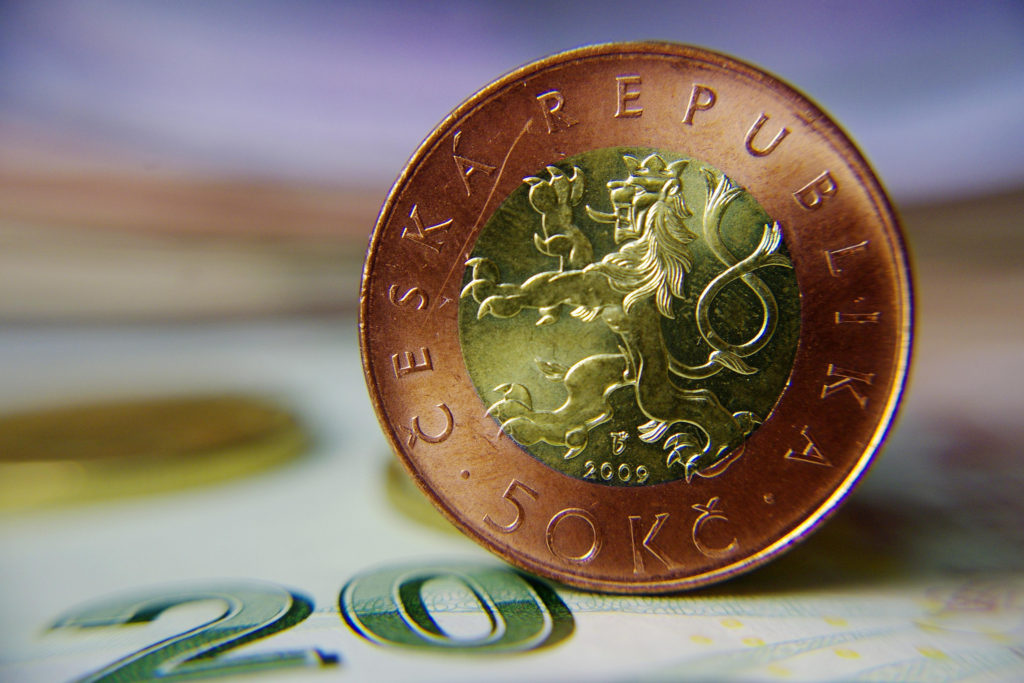
Czech currency comes in bills of 100, 200, 500, 1000, 2000 or 5000 crowns (avoid denominations of the latter – no one will get the change) and coins of 1, 2, 5, 10, 20 and 50 crowns. You'll also find beautiful denominations bearing the effigy of Charles IV (100 crown bill) or (rarer as it's the equivalent of 200 euros!) the first Czechoslovak president Masaryk (5000 crowns).
EUR-CZK exchange rate over 10 years
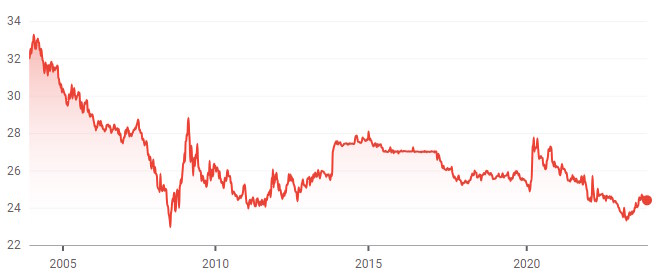
Over the last ten years, one euro has earned between 23 and 29 Czech crowns. The current rate is therefore quite favorable for you. This is a saving you can pass on to your accommodation budget, as it's still possible to find very good hotel accommodation at very good prices in Prague.